The 5 Hidden Risks of Starting a Vending Machine Business
Discover the real risk of vending machine business, from theft to downtime, and learn how smart vending cuts losses and ...

I'm the COO of GOBEAR. We help entrepreneurs, mall operators, 3C mobile stores, event venues, and campus retailers tap into high-margin, low-maintenance vending models.
Buying a screen protector cutting machine is not the same business as running an automatic screen protector vending machine. They can both make money, but in completely different ways.
One ties every sale to a staff member standing at a counter. The other can keep selling when you are not even in the building.
If you pick the wrong model for your location, you may never break even. This guide walks through the real numbers, risks, and use cases so you can decide which option will actually be more profitable for you.
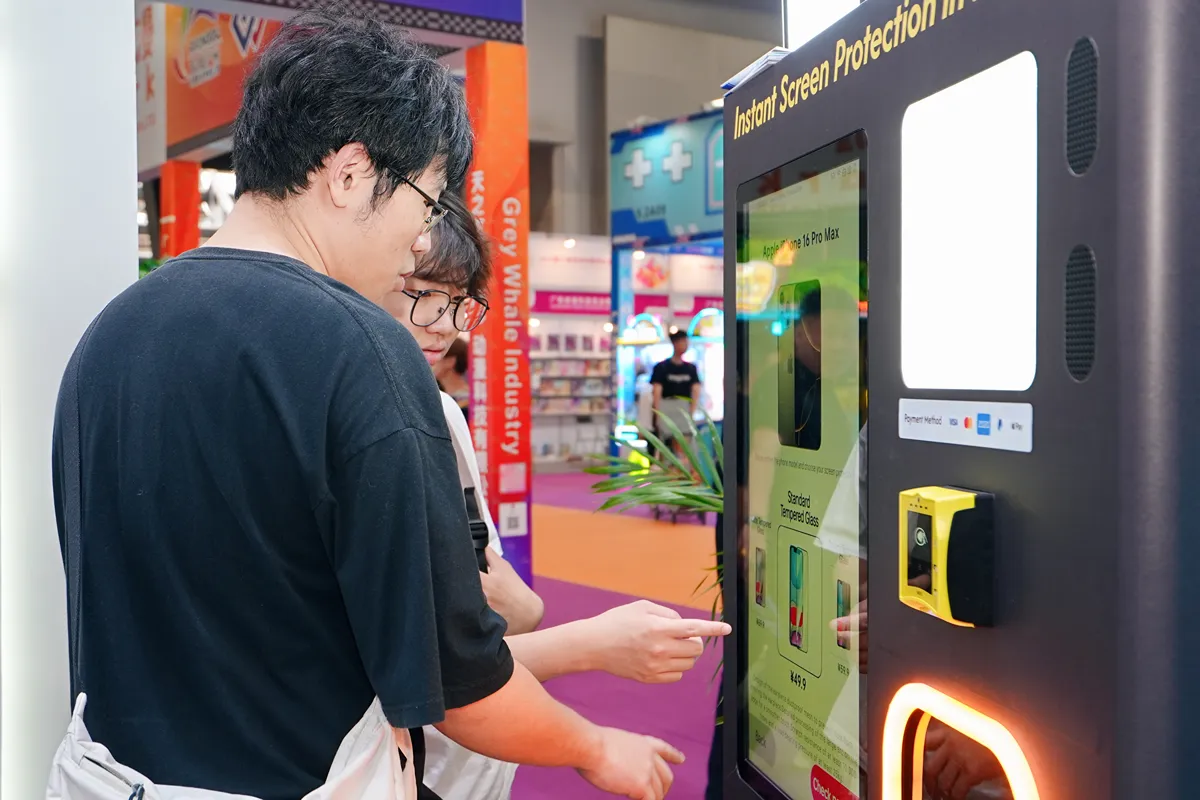
Before we look at the costs, it helps to see how the two models work side by side.
|
Feature |
Screen protector cutter |
Automatic vending machine |
|---|---|---|
|
Business model |
Service tool, needs staff |
Standalone store, no staff |
|
Main goal |
Remove inventory risk for shops |
Turn foot traffic into passive sales |
|
Entry cost |
Low (~$2,000) |
Higher (~$10,000+) |
|
Labor cost |
One employee per transaction |
Zero direct labor per transaction |
|
Ideal location |
Repair shops, retail counters |
Malls, airports, campuses |
A screen protector cutter is an on‑demand production tool for service businesses. It fits best in places that already have staff on duty, like phone repair shops or 3C retail counters.
Instead of stocking hundreds of pre‑cut protectors for different phone models, you buy universal sheets. When a customer asks for a protector, your staff selects the device template and cuts the film on the spot. You only create a product when there is a paying customer, so you don't get stuck with outdated stock.
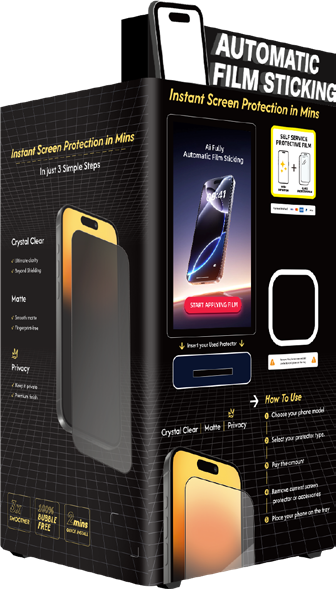
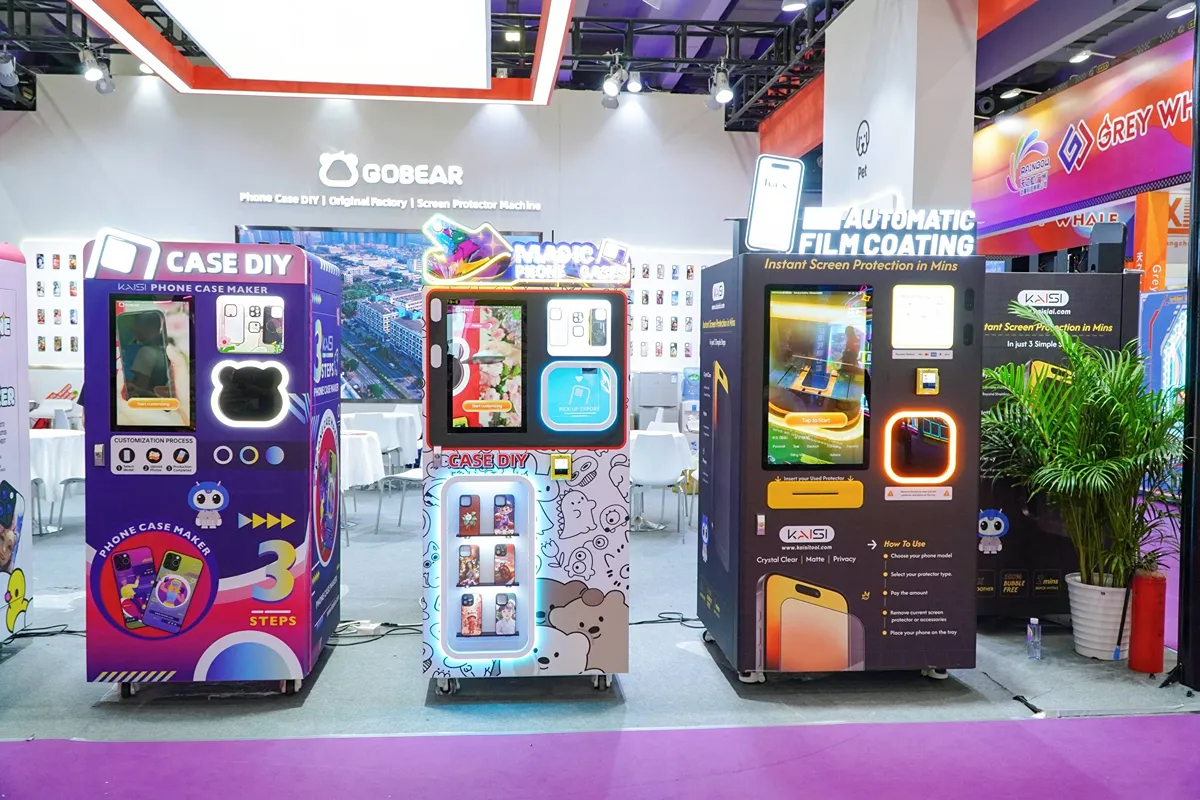
An automatic screen protector vending machine is a self‑service retail unit. It is built to run without a salesperson.
The customer uses the touch screen, selects their device, pays, and the machine dispenses the right product. Most modern machines can be monitored remotely via a cloud dashboard, so you can track sales and stock levels from your phone without being an engineer yourself.
All of this happens without staff, which is why this model works in high‑traffic public spaces where hiring people would be too expensive.
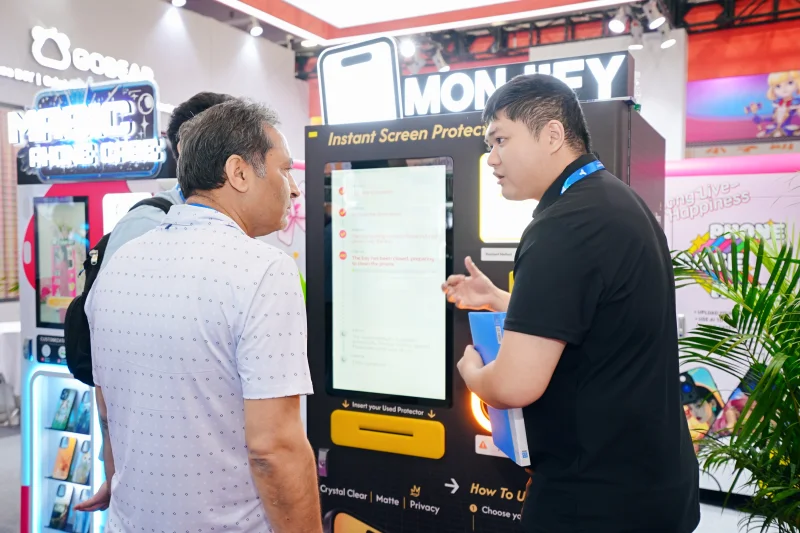
Both models can be profitable, but they handle cost and scale very differently.
You can usually get started with a professional cutter setup for a relatively low upfront cost, typically around $2,000.
Material Cost: The raw film sheets are generally inexpensive.
Service Fee: Shops typically charge a premium for the "cut and install" service.
Profit Margin: The gross margin per job is high because the material cost is low.
The hidden limit is labor. Every protector you sell uses a slot in your staff's schedule. If one transaction takes 10 minutes, a single employee can only complete a handful of jobs per hour. Your maximum revenue is capped by how many people you have behind the counter.
An automatic screen protector vending machine requires a significantly larger upfront investment, often exceeding $10,000, depending on the configuration. However, the ongoing cost structure is different because labor is removed from the equation.
The machine runs 24/7, including late nights and weekends.
Every sale happens without staff on site.
You pay once for the hardware, then focus on product and location.
In a strong location, the combination of higher ticket value and zero labor per sale allows for a faster return on investment. In a weak location, the same machine can struggle to pay even the electricity and space fees. The machine itself is not what makes or loses money—the traffic and context do.
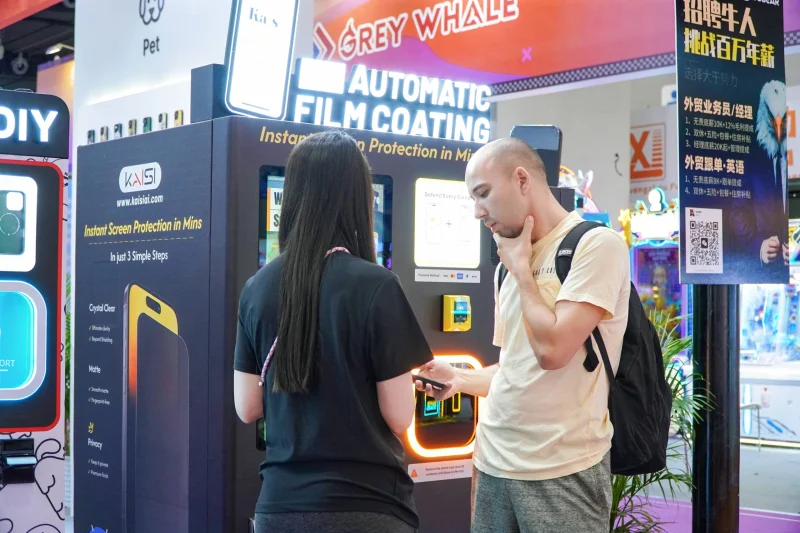
The same machine can be a winner in one place and a dead weight in another.
In a repair shop, a cutting machine can recover its cost very quickly because you are monetizing existing foot traffic. If you put that same machine in a mall corridor without staff, it will sit idle.
Conversely, put a screen protector vending machine in that same mall, and the high rent starts to make sense because you have a 24/7, staff-free sales channel.
In a store environment, customers come specifically to get a problem solved.
Upsell Opportunity: You can easily increase the average ticket size by offering a screen protector with every repair.
Pricing Pressure: Your pricing is often constrained by local competitors, but the low material cost keeps margins healthy.
Efficiency: You are already paying for rent and staff; the cutter just makes those fixed costs work harder.
In this scenario, the cutter’s advantage is inventory efficiency: you capture sales that would otherwise be lost because you didn't stock a specific protector model.
In malls, airports, or campuses, the logic is completely different.
Impulse Driven: Foot traffic is high, but attention spans are short. Most people won't wait in line or look for a clerk.
Pricing Power: In a standalone location with less direct competition, you often have more flexibility to test different price points and bundles.
Scale: A manned counter might struggle to cover wages; an automatic machine only cares about one thing: how many people walk by and make an impulse purchase.
Note: A "strong" location for a screen protector vending machine means hundreds or thousands of people pass by daily. A machine hidden in a quiet corner is rarely profitable, no matter how advanced the hardware is.
Conversion rates depend not just on price, but on how smooth the process is.
If your staff is busy fixing phones, answering calls, and taking payments, adding screen protector installation can create a bottleneck. If a customer sees a line, they might just walk away.
A cutter is a great add-on tool, but it cannot solve the problem of limited staff availability.
Automatic screen protector vending machines have a natural advantage in user experience:
Customers select their own model and product; no waiting.
The interface is standard and predictable.
For many, avoiding a conversation with a salesperson is a plus.
When the process is clear, fast, and easy to pay for, a percentage of passing traffic naturally converts into sales. This "traffic-to-sales" conversion is the engine of the screen protector vending business.
This isn't about which machine is better technology. It is about which business model fits your resources.
Choose the Screen Protector Cutter If:
You already own a store (repair shop, 3C retail, etc.).
You have staff on site who can operate the machine.
You are losing sales because you don't have the right inventory in stock.
You want a low-cost way to increase revenue from existing customers.
Choose the Automatic Vending Machine If:
You have access to high-traffic public locations.
You want a business that runs without your daily presence.
Labor costs in your area make hiring staff too expensive.
You are willing to invest more upfront for a scalable, passive income model.
A Hybrid Strategy?
In some cases, the best strategy is not choosing one model forever, but using them in stages. Many operators start with a cutter in their existing shop to build a steady cash flow and understand local demand. Once they have capital and market data, they expand by placing vending machines in nearby high-traffic locations to scale without hiring more staff.
If you decide that the automated retail model is right for you, you need hardware you can trust.
GOBEAR is a leading manufacturer specializing in automatic screen protector vending machines. Unlike generic equipment, GOBEAR's machines are built for high-volume public spaces, featuring advanced AI model recognition and a robust remote management system.
Whether you are just starting or scaling a profitable vending machine business, we provide the technology to make your passive income goals a reality.
Ready to see the machine in action?
Contact us today to explore our full range of automated retail solutions and get a quote for your specific location.
It is one of the highest in retail. The raw film often costs under $2, but customers happily pay $15 to $30 for a professional install. That usually means a gross margin of 80% or more per sale.
Yes, because it is universal. Tempered glass breaks easily and is specific to one model. Hydrogel is flexible, unbreakable, and fits any curved screen instantly, meaning you never have dead stock.
Surprisingly little. Most automatic screen protector machines need less than 10 square feet (about 1 square meter). This lets you squeeze them into high-traffic corners where rent is expensive, but space is tight.
Not at all. Modern machines like GOBEAR’s are plug-and-play. Routine maintenance involves simple tasks like cleaning the screen and refilling film sheets, which anyone can learn in minutes.
A quality machine is built for the long haul, typically lasting 5 to 10 years with basic care. The software updates remotely, so your machine stays current with new phone models without needing hardware upgrades.
Tell us about your business goals, and our experts will provide a tailored solution and a detailed profitability report. Let's start building your new revenue stream together.